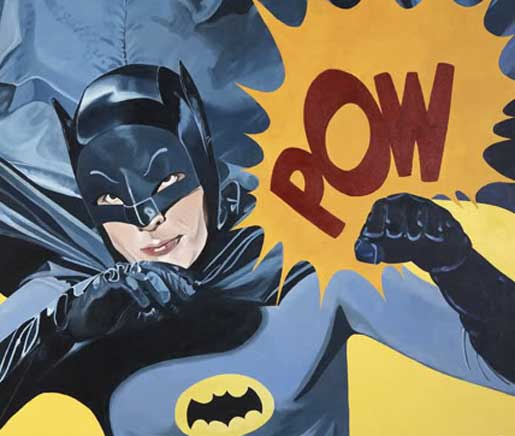
By John San Filippo, jmsb@johnsanfilippo.com
www.johnsanfilippo.com
Subscribe: www.tinyurl.com/jmsbblog
Press interviews are great – as long as you don’t say something stupid. The more prepared you are for an interview and the better you understand the interview process, the less likely you are to say something stupid. That’s where this blog comes in.
The first thing to consider when a reporter asks you for an interview is whether you’re really an expert on the topic. Sometimes a reporter will call just because he thinks you might have something to say about a particular topic. There’s no shame in telling the reporter that this particular topic is outside your wheelhouse if that’s the case. Like the old saying goes, it’s better to keep your mouth shut and let people think you’re ignorant than to open your mouth and remove all doubt. That said, make sure you invite the reporter to call you back about other topics that may better fit your expertise.
So you’ve agreed to an interview. Now what?
Now you prepare. But how do you do that? The one thing you don’t want to do is waste a lot of time memorizing facts and figures. If a reporter is only looking for facts and figures, she’ll turn to Google, not you. What a reporter is looking for is a point of view. What do you, as an expert, think about those facts and figures?
Unless you already have several interviews under your belt, you should take the time to talk to others in your organization, especially the person or persons responsible for your PR. Decide what your overall message is for the given topic, as well as what talking points you want to cover. Brainstorm questions you think the reporter will ask, but …
An interview is one time you should definitely expect the unexpected. The unexpected question, that is. No matter how well you prepare, you’re going to get a question you didn’t anticipate. In fact, when I was a reporter, that’s when I knew I was doing a good job – when the interviewee paused, said, “Gee, that’s a good question,” and then paused again to think of the answer.
The most important thing to remember during an interview is to stay relaxed. An interview is really just a conversation between someone who knows something (you) and someone who wants to know what you know (the reporter). Treat it as such and you should do fine.
Of course, there are some reporters out there who like stirring the pot. They’re the exception, I promise you, but they seem intent on making you break the golden rule of don’t say something stupid. And when I say something stupid, I don’t necessarily mean something nonsensical. I mean something you’ll regret having said later.
There’s a great article here that covers five common “trick” questions and how to deal with them. Based on my own experience, the one you need to be most watchful of is the question about your competition. Briefly stated, don’t ever talk about your competitors to a reporter. I know it’s tempting. After all, your company is so much better than theirs. But don’t do it. In fact, don’t even mention them by name in any context. That way, your meaning can’t be misconstrued.
Along these same lines, be careful of the reporter that comes across too chummy. Maybe he really is that friendly, or maybe he’s trying to get you to put your guard down and offer up that stupid comment. Better safe the sorry.
Finally, don’t ever ask the reporter if you can see a copy of the article before it goes to print. The answer will be no 100 percent of the time and you’ll end up looking like a rank amateur.
Need help prepping for an interview? Drop me an email.
That is all.
Monday, December 15, 2014
Tuesday, December 9, 2014
Amazon, Your New Diapers Smell Like Poo
By John San Filippo, jmsb@johnsanfilippo.com
Subscribe: www.tinyurl.com/jmsbblog
I want to take this opportunity to thank Jeff Bezos. Jeff, you make my job so easy. Every time I’m looking for a what-not-to-do example of brand management, along you come with your next hair-brained idea.
My very first blog was about Amazon and its ridiculous brand extension strategy. For anyone unfamiliar with this term, here’s the Wikipedia definition:
Brand extension or brand stretching is a marketing strategy in which a firm marketing a product with a well-developed image uses the same brand name in a different product category. The new product is called a spin-off. Organizations use this strategy to increase and leverage brand equity. An example of a brand extension is Jello gelatin creating Jello pudding.
Extending one’s brand can make a lot of sense – and a lot of money. Using the example above, the leap from gelatin to pudding is a short one, so it makes sense to people.
Then there’s Amazon. Amazon seems to think it can be successful with any product or service just by stamping an Amazon label on it. When I wrote my previous blog on Amazon and brand extension, the company had just introduced the Fire Phone. I predicted that the Fire Phone would be a fiery flop – and it was. When a consumer wants a new phone, there’s no way Amazon can compete with Apple or Samsung for top-of-mind positioning.
That didn’t stop Amazon from introducing the Fire Stick, which appears to be a Google Chromecast knock-off. Amazon expects you to believe that they’re now experts in television viewing experiences.
Just when I thought I’d seen it all (or smelled it all, as the case may be), along comes the news that Amazon is getting into the disposable diaper business. Yes, you read this correctly and it’s not an Internet prank. Amazon has slapped its brand label on your baby’s butt – as long as you’re an Amazon Prime member, that is.
It’s true. Along with video streaming and free shipping on some items (whatever those two have to do with each other), your Amazon Prime membership now includes the privilege of buying Amazon diapers. Non-members will still need to find their diapers elsewhere.
It’s hard for me to even imagine the strategy session that resulted in this brilliant idea. Let’s see. We’ve already turned our bookstore into a big flea market. We’re trying to keep up with Google and Microsoft in the cloud computing business. We’re also-rans in a wide array of consumer electronic items. How can we screw this brand up even further? That’s it! Diapers!!
How should Amazon have extended its brand? I said years ago that they should have opened brick-and-mortar bookstores. An observation I made just the other day convinced me I was right.
My seven-year-old granddaughter is an exceptional reader and, unlike me at that age, she actually enjoys reading. When she needs a new book, does she say, “Nanu, log me onto iBooks,” or, “Nanu, bring up the Amazon website on your computer”? No, she says, “Nanu, can we go to Barnes & Noble?” Can we go to Barnes & Noble? That's a great user experience.
Banks and credit unions continue to build branches, and they’re not alone. Brick and mortar is making a comeback. You heard it here first.
But is there a lesson in all this for financial technology companies? I think the lesson is universal. The only thing that drives crazy brand extension is greed. So the simple lesson is: Don’t be greedy. Among the many other problems that greed causes, it will screw up your brand. And in the end, your brand is really all you have.
That is all.
Monday, December 1, 2014
WTH Is the Diff Between a Product Sheet, a Case Study and a White Paper?
By John San Filippo, jmsb@johnsanfilippo.com
Subscribe: www.tinyurl.com/jmsbblog
We’ve already established that content marketing is a pretty important thing. You can read my thoughts on the topic here, as well as here. With the holiday slow-down inevitably upon us, it’s a good time to take inventory of your content pieces, make sure everything is up to date, and most important of all, see if you’re missing anything you need.
Implicit in this last step is an understanding of how each content piece is supposed to function – what purpose it serves. So today I’m going to discuss three common marketing documents and where they fit in your content arsenal.
Product Sheets
Call it a product sheet, a product brief, a product slick, a brochure. Whatever you call it in your organization, I’m talking about a document dedicated to describing a single product.
My rule of thumb: Every product should have a product sheet. It doesn’t make sense to me to tell a prospect that our product is important enough for you to buy, but not important enough to justify one stinkin’ page of copy.
Of course, like all others, this rule has an exception. If your product has a base module and a bunch of optional add-on modules, it makes sense to explain the entire suite in a single document. Imaging systems are a good example of this. Remember, the whole idea is to make your products easy to understand for prospects. And in any event, every product still gets mentioned somewhere in your marketing materials.
The Big Mistake: The most common mistake with product sheets is the copywriter who provides too much information. Stop the TMI! A product sheet isn’t supposed to tell everything there is to tell about a product. On the contrary, the product sheet should merely pique interest – it should raise questions and spark a conversation with the salesperson.
Case Studies
I love case studies. Out of all the content types you can produce, case studies create the most emotional connection with their readers. That's because a case study represents a peer telling a reader how he or she addressed a situation.
Sure, anyone reading a case study knows it’s just another marketing document created by some company trying to pimp its products. On the other hand, the reader also knows that one of his peers was willing to put his name on the line to endorse the product.
That carries a lot of weight.
The case study format is fairly simple:
- Describe the problem.
- Explain how it was solved.
- Detail the results in quantifiable terms.
The Big Mistakes: There are two common case study mistakes. The first is adding a bunch of marketing fluff. For example, instead of saying, “Last National Bank achieved a 10-percent reduction in operating costs,” you might be tempted to say, “Last National Bank achieved a 10-percent reduction in operating costs because our product is so freaking great.”
People get that your product is so freaking great. They understand that’s why you’re writing a case study about it. You don’t need to beat them over the head with it. Step back out of the way and let your customers tell their own stories.
The other common mistake is multiple case studies that tell the same story. I’m all for more than one case study on the same product – as long as each one tells a unique story in terms of problems solved and results achieved. Otherwise, you’re just going to bore your readers telling the same story over and over again.
White Papers
Why do we write white papers? To establish thought leadership, right?
Whatever.
The Big Mistake: Yes, I’m starting this section with The Big Mistake.
If you’re only writing white papers for the lofty goal of establishing thought leadership – i.e., you’re not writing them with the willful intent to market your product – you’re missing the boat.
Don’t get me wrong. I’m not saying there’s no value in thought leadership. What I’m saying is that you need to put some effort into deciding exactly what direction you want to lead that thought. Or put more bluntly, you need an ulterior motive.
I’ve found that white papers are especially useful in two situations. The first is when there’s some broad misunderstanding or lack of knowledge out in the marketplace.
For example, document management (DM) systems and enterprise content management (ECM) systems both compete for an FI’s imaging dollars. ECM systems are much more robust, but they’re also typically more expensive. Do you know the difference between DM and ECM? If you’d read the white paper I created when I was at Jack Henry, you would. My paper explained the difference, but in a way that clearly pointed the reader toward ECM (JHA’s product).
Another great use of a white paper is to espouse the features that make your product unique, but in a very generic way – in other words, to highlight your key competitive differentiators without telling anyone that’s what you’re doing.
For example, suppose the key differentiators of your product are “less filling” and “tastes great.” You might write a white paper explaining why anyone shopping for a product in your product class should only consider products that are less filling and taste great. You sound neutral in the white paper, but the logic inevitably leads the reader to your product, and only your product.
If any of this doesn’t make sense, please feel free to drop me a note. I’d love to hear from you.
That is all.
Tuesday, November 25, 2014
There Must Be 50 Ways to Run a Tradeshow ... 50 Ways to Run a Tradeshow
By John San Filippo, jmsb@johnsanfilippo.com
www.johnsanfilippo.com
Subscribe: www.tinyurl.com/jmsbblog
I tell you so.
The answer is easy. Let me
Tell you what I know.
I'd like to help you make your
Tradeshow presence grow.
There must be fifty ways
To run a tradeshow.
It all depends on how you’re hoping
To be viewed.
Please don’t be crude or lewd or rude.
You must be forever shrewd.
If you go without a plan,
You will certainly be screwed.
There must be fifty ways
To run a tradeshow.
Fifty ways to run a tradeshow.
You just pack up the booth, Ruth.
Hop on the plane, Dwayne.
Call up the press, Jess,
And have a great show.
You set up a meet, Pete.
Work until dawn, Shawn.
Lock up when you leave, Steve,
And have a great show.
Monday, November 17, 2014
Don’t Screw Up Your Tradeshow: 3 Lessons from BAI Retail Delivery
By John San Filippo, jmsb@johnsanfilippo.com
www.johnsanfilippo.com
Subscribe: www.tinyurl.com/jmsbblog
www.johnsanfilippo.com
Subscribe: www.tinyurl.com/jmsbblog
Are you tired of tradeshows eating up your marketing budget
with little to no apparent return? Do you think it’s a waste of time to have
your employees manning your booth when they could be doing real work? Is your
travel budget out of control? Be honest. Do you think tradeshows just suck?
I’ll be brutally honest. The problem isn’t tradeshows. The
problem is you. If your entire tradeshow “strategy” is making sure that your
booth is set up and that cardboard-cutout employees are positioned in the booth
in case a prospect comes by, you’re right – tradeshows suck.
But it doesn’t have to be that way. I just got back from
covering BAI Retail Delivery in Chicago for CU Times. While there, I was reminded of three simple ways that you can
assure success at most any tradeshow.
1. Have a Plan!
That seems simple enough, doesn’t it? Have a plan. Obvious,
right?
A couple of weeks ago, I was talking to the sales manager at
a reasonably well-known fintech company. We’ll call it Company A.
Knowing that Company A had exhibited at Retail Delivery in
the past, I asked whether they’d be there this year, as well. The sales manager
told me no. He said that every year, he reviewed the attendee list and sent
salespeople to Retail Delivery who had prospects attending. But for the most
part, the salespeople never caught up with the prospects they were looking for.
So, reasoned the sales manager, why bother?
While at Retail Delivery, I found myself at a bar (Would it
be better if I said it was a juice bar?) with a group that included a top
salesman from Company B, a competitor of Company A. I asked the salesman from
Company B whether he was having a good show. No, he said, he was having a great show.
How could that be?
The salesman explained that when he got the attendee list,
he started calling prospects for appointments. By the time he got to Retail
Delivery, his calendar was booked solid. He got to speak to just about everybody
on his list.
Let that sink in for a minute. Company A trusted blind luck
and as a result found no value in Retail Delivery. Company B had a plan – a pretty
simple plan – and it paid off big time. Need I say more?
2. Engage the Media
As soon as my name was added to the media list, my inbox was
flooded with invitations to speak with representatives from various companies.
I spoke with people from companies you’d probably recognize, like Fiserv (for a
story that hasn’t been published yet) and Malauzi Software (for a story you can
read here).
Clearly I didn’t have time to talk to everyone I would’ve
wanted to, but I did interview a representative from a company I’d not heard
much about. It’s an online and mobile banking company called Backbase. Apparently
big in Europe, they claim to have solved the omnichannel conundrum. (You can
read more about Backbase here.)
What’s my point? Sure, there’s a lot of competition for the
attention of every journalist at a tradeshow, but that doesn’t mean you shouldn’t
try to reach out. You never know if you’ll catch some reporter’s eye. And guess
what else. I saved all those emails. If I ever need a source for a particular
topic, I’ll check those emails first.
3. Differentiate
Yourself
If I’ve said it once, I’ve said it a thousand times.
Marketing is all about differentiation. That’s another no-brainer, but most
people seem to forget about differentiation when they’re getting ready for a
tradeshow.
What do I mean by differentiation? Here’s a simple example.
At Retail Delivery, there was a reception in the expo hall both nights. The
first night, online banking provider Q2 gave away soft pretzels in their booth.
The second night, they had draught beer.
Am I trying to imply that anyone’s online banking decision
would be swayed by a pretzel? Of course not. However, a month from now, if
someone asked you to name an online banking provider you saw at Retail Delivery,
I think there’s a decent chance you’d think of the beer and pretzel company
first. That’s not bad brand reinforcement.
On the other hand, I think you can go too far with
differentiation. There was another exhibitor that had a magician in its booth.
He was great. In fact, he was so great, I got his business card. But he was
also so great, I completely forgot the company he represented. His greatness
overshadowed their message, at least for me. Oops.
Why I’m Right
Back in 1999, Las Vegas played host to the 20th
annual COMDEX computer show. It was the most amazing event I ever attended. It
occupied the entire Las Vegas Convention Center, the entire Sands Convention
Center, all of the meeting rooms at the Las Vegas Hilton, and three gigantic
temporary buildings in the convention center parking lot.
By 2004, COMDEX had vanished. What happened, and how did it
happen so quickly? IMHO, the Internet happened. Exhibitors and attendees alike
reasoned that there was no point in attending big tradeshows when the Web
provided such a great conduit for product information. It was all right there
at everyone’s fingertips, right?
Remember how video conferencing was supposed to eliminate
your travel budget? Didn’t happen, did it? The same is true with tradeshows.
People are finally starting to realize that there’s just no substitute for live
human interaction. Tradeshows are making a comeback. It’s up to you whether
they’re a smart investment or a stupid waste of money.
That is all.
Tuesday, November 11, 2014
Same Bat Time, Same Bat Omnichannel
by John San Filippo, jmsb@johnsanfilippo.com
www.johnsanfilippo.com
Subscribe: www.tinyurl.com/jmsbblog
I’m sitting in a Chili’s Too at DFW with about three hours to kill, so how better to kill them than by writing a short blog? I’m on my way to Chicago – where I hear it’s about six degrees – for the BAI Retail Delivery Show. I’m on assignment for Credit Union Times.
As I sit here sipping my ninth iced tea, I wonder what the buzz will be about at RDS this year. Last year in Denver, it was omnichannel. It was everywhere. You couldn’t take three steps without tripping over omnichannel. I actually wondered whether presenters were incentivized to use the term, because they all did, and many of them used it even when it wasn’t appropriate.
I feared that if attendees heard the term omnichannel overused and misused as much as they did, they might get confused and, worse, might think omnichannel isn’t important. That would be tragic, because IMHO omnichannel is extremely important.
Do you know the difference between multichannel and omnichannel? Sure you do, but for the benefit of the next ignorant guy that clicks this link, I’ll explain it anyway.
Multichannel, as the names suggests, is having a presence in multiple delivery channels – ATMs, online banking, mobile, etc. Omnichannel extends that idea beyond a mere presence in all available channels. Omnichannel is about providing a consistent, transparent and whenever possible, continuous user experience across all those channels. By continuous, I’m referring to the ability for a consumer to leave off in one channel and finish up the transaction via another channel.
In other words, regardless of the channel, a consumer always knows he’s dealing with your FI because it always looks the same, feels the same, and works the same.
Hmm. That sounds an awful lot like smart branding, doesn’t it?
So, again IMHO, omnichannel is actually nothing more than the convergence of great technology and great branding. To that I would add: It’s about time! When you address every issue, at least in part, as a branding issue, only good things will happen. The emergence of omnichannel is an ideal case in point.
That is all.
Thursday, November 6, 2014
Apple Pay vs CurrentC: A Battle of Brand Extensions
by John San Filippo, jmsb@johnsanfilippo.com
www.johnsanfilippo.com
Subscribe: www.tinyurl.com/jmsbblog
When I was but a lad, I went to a seminar (yes, a real, live
event that I actually had to leave the house for) put on by Bob Bly. I checked
Amazon and Bly hasn’t published a book on copywriting in a few years, but back
when I was starting out, he was the crown prince of freelance copywriting.
One story he told has always stuck with me. This may be a BS
story he concocted just to make a point, but he told us of a fellow copywriter
who, to be as frugal as possible, did his own landscaping, home maintenance,
etc. Being as tight as he was with his money, he couldn’t understand why he
didn’t have more of it. Bly’s answer was obvious. The guy was spending too much
time saving money and not enough time making money. The lesson was: Do what you’re
good at and let other people do what they’re good at. Easy enough, right?
I’ve applied this rule time after time in the ensuing years,
and it’s always served me well. Sure, I did my own brakes one time and built
myself a PC once, but those were mostly just to say I did it. Generally
speaking, I let the experts do what the experts are trained to do. However, it was
only in the last couple of years that I realized all this is really just a
lesson in brand extension.
(Click here to read my previous post on Amazon’s
insanely goofy brand extension strategy.)
If my own brand is all about providing top-notch marketing
and writing services to fintech companies, I’m truly stupid if I attempt to
extend my brand into, say, landscaping – even if I’m only providing those
services to myself. I need to stay focused on great marketing and writing, and
let the gardener mow the lawn.
So what do lawn mowers have to do with mobile payments?
Funny you should ask.
First, let me say for the record that payments have always
been mobile. Cash is mobile. Credit cards are mobile. But of course, we’re
talking about device-centric mobile
payments. That’s a whole new ball game. And because it’s new, somebody needs to extend their brand
into this space to fill the void. Should it be Apple and its partners, or
should it be the retailer consortium known as the Merchant Customer Exchange
(MCX)?
First let’s look at MCX, which really has no brand of its
own. However, its big backers – CVS, Best Buy, and Walmart, for example – do have
well-established brands. What do they all have in common? They’re all retailers. Beyond the fact that they’re all
retailers, they have no experience in payments and payment systems, nor do they
have any experience in developing consumer technology products. This all raises
a giant brand extension red flag for me.
On the other hand, we have Apple, a company whose entire
brand centers around making the human experience cooler through technology.
From what I can tell, Apple Pay does exactly that. And while one might argue
that Apple has no experience in payments, the same can’t be said for Apple’s
partners in this endeavor – partners like Visa and MasterCard, along with
hundreds of banks and credit unions. In other words, Apple Pay seems like a
very logical extension of the Apple brand.
The folks at MCX have been pretty tight-lipped about the
specifics, so speculation about potential technical issues has run rampant.
Will transactions be settled one at a time via ACH, much like an uncoupled
debit card? Will consumers need to preload their CurrentC account? Will
consumers need a separate instance of CurrentC on their phone for each
retailer? If yes to these last two questions, will all CurrentC instances share
a common balance?
These are questions for another time, and probably for
someone else’s blog. In the meantime, from a purely brand-oriented perspective, Apple
Pay seems to be the obvious frontrunner in the mobile payments race. Walmart
should stick to what it does best: selling stuff for dirt cheap and providing
fodder for websites like this.
That is all.
Subscribe to:
Posts (Atom)